
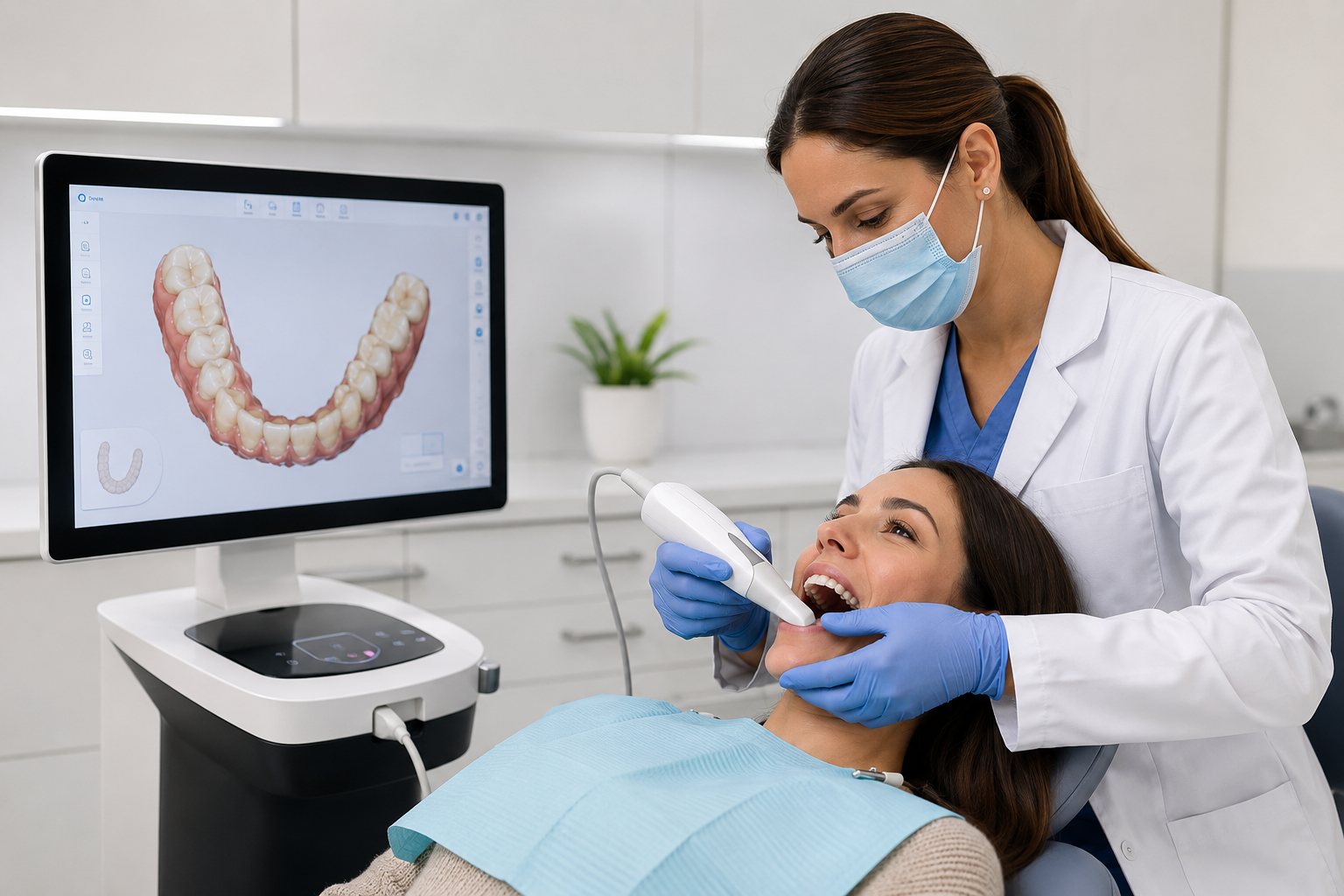
Dental visits have changed significantly in recent years. Many patients remember having trays filled with thick impression material placed in their mouths to create moulds of their teeth. While traditional impressions are still useful in some situations, digital technology now offers a more comfortable and precise alternative.
At Guelph Royal Dental Centre, 3D scanning can help the dental team capture detailed images of a patient’s teeth and gums without relying on conventional moulds. This technology enables more accurate treatment planning and helps patients better understand what is happening in their mouths.
What Is a 3D Dental Scan?
A 3D dental scan uses a small handheld device called an intraoral scanner. The scanner is gently moved around the mouth, capturing thousands of images of the teeth, gums, and bite.
Specialized software combines these images to create a detailed three-dimensional model. You can view the digital model immediately on a computer screen, rotate it from different angles, and enlarge it to show specific areas.
The process does not use X-rays or radiation. It simply records the visible surfaces inside the mouth, much like a highly advanced digital camera.
A More Comfortable Experience
Traditional dental impressions require patients to bite into a tray filled with soft material and hold it in place until it sets. Some people find this uncomfortable, especially if they have a sensitive gag reflex, difficulty breathing through their nose, or anxiety about dental procedures.
Digital scanning usually feels much easier. The scanner is slim, and the dental professional can pause whenever necessary. There is no impression material, unpleasant taste, or long waiting period while a mould hardens.
This can be particularly helpful for children, older adults, and patients who feel nervous during dental appointments.
Greater Accuracy for Dental Treatments
One of the main benefits of 3D scanning is precision. Traditional impressions can sometimes stretch, develop air bubbles, or become slightly distorted when they are removed from the mouth. Digital scans reduce many of these possible errors.
A precise model helps the dentist and dental laboratory create restorations and appliances that fit more accurately. The technology may be used when planning:
- Dental crowns and bridges
- Clear aligners and orthodontic treatment
- Nightguards and sports mouthguards
- Dental implants
- Dentures and partial dentures
- Cosmetic dental treatments
Better-fitting dental work can improve comfort, function, and the overall treatment experience. However, adjustments may still be needed because every patient’s mouth and bite are different.
Easier Treatment Planning and Communication
Dental concerns are often difficult to understand when they cannot be seen clearly. A 3D scan allows patients to view a detailed image of their own teeth on a screen.
The dentist can point out worn areas, damaged teeth, spacing concerns, bite problems, or changes that may require monitoring. Seeing the issue can make it easier to understand why a treatment has been recommended and what the treatment is designed to accomplish.
At Guelph Royal Dental Centre, digital images may also help the dental team compare changes over time. Previous scans can be reviewed alongside newer ones to monitor tooth movement, gum changes, wear, or the condition of existing dental work.
Faster and More Efficient Appointments
Because the scan appears on the screen immediately, the dental professional can check whether all necessary areas have been captured before the appointment ends. If a section is missing, the professional can often scan that small area again without repeating the entire process.
Digital files can also be sent securely to a dental laboratory without shipping a physical impression. This may simplify communication between the dentist and the laboratory and reduce delays caused by damaged or incomplete moulds.
The exact treatment timeline will still depend on the type of procedure, the dental laboratory, and the patient’s individual needs.
Can 3D Scanning Find Cavities or Gum Disease?
An intraoral scan provides detailed images of the visible teeth and gums, but it does not replace a complete dental examination. It also does not replace dental X-rays when X-rays are necessary.
The scan may help reveal visible cracks, worn enamel, tooth movement, gum recession, or changes in the bite. However, cavities between teeth, infections below the gumline, and problems inside a tooth may require X-rays or other diagnostic methods.
Patients should continue to attend regular checkups even when they are not experiencing pain. Many dental concerns are easier to manage when they are identified early.
Signs That Should Be Checked by a Dentist
Contact a dental office if you notice:
- Ongoing tooth sensitivity
- Pain when biting or chewing
- Bleeding, swollen, or tender gums
- A chipped, cracked, or loose tooth
- Changes in the way your teeth meet
- A crown, filling, or bridge that feels loose
- Jaw discomfort or frequent morning headaches
- Mouth sores that do not heal within two weeks
A 3D scan may be recommended as part of the assessment, depending on the concern and the treatment being considered.
Supporting Preventive Dental Care
Digital technology can improve dental care, but daily habits remain essential. Brush twice a day with fluoride toothpaste, clean between your teeth daily, limit frequent sugary snacks and drinks, and wear a mouthguard during contact sports.
Regular dental examinations and professional cleanings allow the dental team to monitor your teeth, gums, bite, and existing restorations. Preventive visits can also identify small changes before they become more uncomfortable or require more extensive treatment.
Experience Modern Dental Care in Guelph
Whether you need a routine examination, a custom mouthguard, a dental restoration, or information about orthodontic treatment, a digital scan may make the process more comfortable and easier to understand.
To learn whether 3D scanning is suitable for your dental needs, contact the office at 519-837-1870 and book an appointment with Guelph Royal Dental Centre.
DISCLAIMER: The advice offered is intended to be informational only and generic in nature. It is in no way offering a definitive diagnosis or specific treatment recommendations for your particular situation. Any advice offered is no substitute for proper evaluation and care by a qualified dentist.