
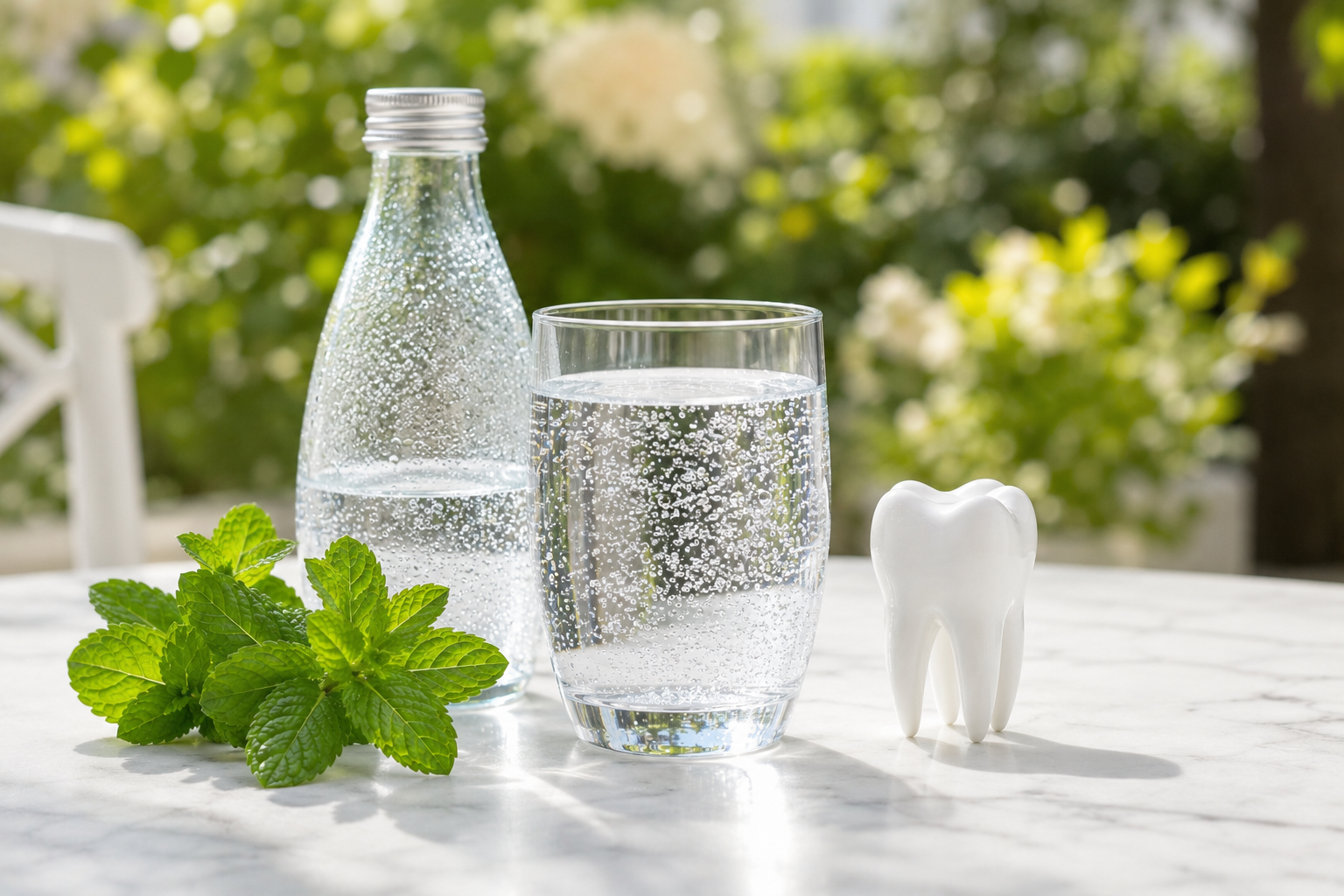
Sparkling water has become a popular alternative to pop, juice, and other sugary drinks. It is refreshing, usually contains little or no sugar, and can make drinking more water throughout the day more enjoyable. However, many people wonder whether all that carbonation can damage their teeth.
The short answer is that plain sparkling water is generally less harmful to teeth than sugary soft drinks, but it is still slightly acidic. Drinking it frequently, especially flavoured varieties with added acids, may contribute to enamel wear over time. If your teeth already feel sensitive, your drinking habits may also make the discomfort more noticeable.
At Guelph Royal Dental Centre, patients sometimes ask whether they need to give up sparkling water completely. In most cases, they do not. Understanding how carbonation affects your teeth and making a few simple changes can help protect your enamel while still allowing you to enjoy your favourite fizzy drink.
Why Is Sparkling Water Acidic?
Sparkling water is made by adding carbon dioxide gas to water. When carbon dioxide dissolves, it creates a mild acid called carbonic acid.
This is what gives sparkling water its slightly sharp or tangy taste.
Because tooth enamel can gradually wear down when repeatedly exposed to acidic substances, it is reasonable to wonder whether carbonated water could cause enamel erosion.
Plain sparkling water is usually only mildly acidic and is generally much less concerning than regular pop, energy drinks, lemonade, or many fruit juices. The risk can increase, however, when sparkling water contains citrus flavourings, citric acid, sugar, or other acidic ingredients.
What Is Enamel Erosion?
Enamel is the hard outer layer that protects each tooth. Although enamel is extremely strong, it can gradually weaken when exposed to acids.
Unlike some tissues in the body, enamel does not grow back once it has been significantly worn away. This makes prevention particularly important.
Early enamel erosion may be difficult to notice. As it progresses, you may experience:
- Increased sensitivity to cold, hot, sweet, or acidic foods
- Teeth that appear more yellow as the underlying dentin becomes visible
- Rough or uneven tooth edges
- Small chips or cracks
- Shiny or smooth areas on the tooth surface
- Increased risk of cavities
These changes usually happen gradually, not after occasionally drinking sparkling water.
Can Sparkling Water Cause Tooth Sensitivity?
Sparkling water itself does not automatically cause sensitive teeth. However, frequent exposure to acidic beverages may weaken enamel over time.
When enamel becomes thinner, the layer underneath it, called dentin, may become more exposed. Dentin contains tiny channels that connect with the nerves inside your teeth. This is why exposed dentin can make cold drinks, hot coffee, sweets, or even cold air feel uncomfortable.
Sensitivity may also have other causes, including gum recession, cavities, cracked teeth, worn fillings, aggressive brushing, or teeth grinding.
If sensitivity continues or worsens, a dental exam can help determine what’s causing it.
Are Flavoured Sparkling Waters Worse for Teeth?
They can be.
A plain carbonated water containing only water and carbon dioxide is usually the better choice for your teeth. Some flavoured sparkling waters contain additional acids, particularly citric acid, which can make the drink more acidic.
Lemon, lime, grapefruit, and other citrus-flavoured varieties may deserve extra attention.
Before purchasing sparkling water, check the ingredient list. Products containing sugar, fruit juice concentrate, citric acid, or other added acids may affect enamel more than plain sparkling water.
Sugar matters because bacteria in dental plaque can use it to produce additional acids that contribute to tooth decay.
How to Enjoy Sparkling Water While Protecting Your Teeth
You do not necessarily need to remove sparkling water from your diet. A few habits can help reduce unnecessary acid exposure.
Drink It With Meals
Try enjoying sparkling water during a meal rather than sipping it continuously throughout the day.
Your mouth produces more saliva while eating, which helps neutralize acids and wash them away.
Avoid Constant Sipping
The frequency of acid exposure matters.
Sipping sparkling water slowly over several hours repeatedly exposes your enamel to acidity. Finishing the drink within a shorter period is generally better for your teeth.
Choose Plain Varieties
Plain sparkling water is usually preferable to versions containing added sugar, citrus juice, or acids.
Reading the ingredient label can help you compare products.
Use a Straw When Appropriate
Using a straw may help reduce direct contact between an acidic beverage and the front surfaces of your teeth.
Position the straw toward the back of your mouth rather than holding the drink around your teeth.
Rinse With Regular Water
After drinking sparkling water, especially a flavoured variety, rinse your mouth with plain water.
This can help wash away acids and restore a more neutral environment in your mouth.
Do Not Brush Immediately Afterwards
Brushing immediately after consuming something acidic can place additional stress on temporarily softened enamel.
Consider rinsing with water and waiting roughly 30 minutes before brushing.
What If Your Teeth Are Already Sensitive?
Don’t ignore persistent sensitivity.
A dentist may recommend toothpaste specifically formulated for sensitive teeth, fluoride treatments, bonding, treatment for gum recession, replacement of damaged fillings, or another approach depending on the cause.
During an examination at Guelph Royal Dental Centre, your dentist can also look for signs of enamel erosion, decay, gum recession, cracks, grinding, and other problems that may be contributing to sensitivity.
The earlier these issues are identified, the easier they may be to manage.
Regular Dental Checkups Can Help Protect Your Enamel
Many enamel changes develop gradually and may not cause pain at first.
Regular dental examinations allow your dental team to monitor changes in your enamel, gums, fillings, and overall oral health before small concerns become more complicated.
Professional cleanings also remove plaque and hardened tartar from areas that are difficult to clean thoroughly at home.
Between appointments, brushing twice daily with fluoride toothpaste, cleaning between your teeth, limiting frequent sugary or acidic drinks, and maintaining a balanced diet can all support healthier teeth.
When Should You Visit a Dentist?
Consider scheduling a dental appointment if you notice sensitivity that persists, worsens, or affects your ability to eat and drink comfortably.
You should also have your teeth checked if you notice visible enamel changes, cracks, discolouration, pain when biting, gum recession, or repeated discomfort when consuming hot or cold foods.
Sparkling water can usually be part of a tooth-friendly lifestyle, especially if you choose plain varieties and avoid sipping acidic drinks throughout the day. Focus on your overall habits rather than worrying about an occasional glass of carbonated water.
If you are experiencing tooth sensitivity, concerned about enamel erosion, or want to stay on top of preventive dental care, call 519-837-1870 to book an appointment or contact Guelph Royal Dental Centre.
DISCLAIMER: The advice offered is intended to be informational only and generic in nature. It is in no way offering a definitive diagnosis or specific treatment recommendations for your particular situation. Any advice offered is no substitute for proper evaluation and care by a qualified dentist.