
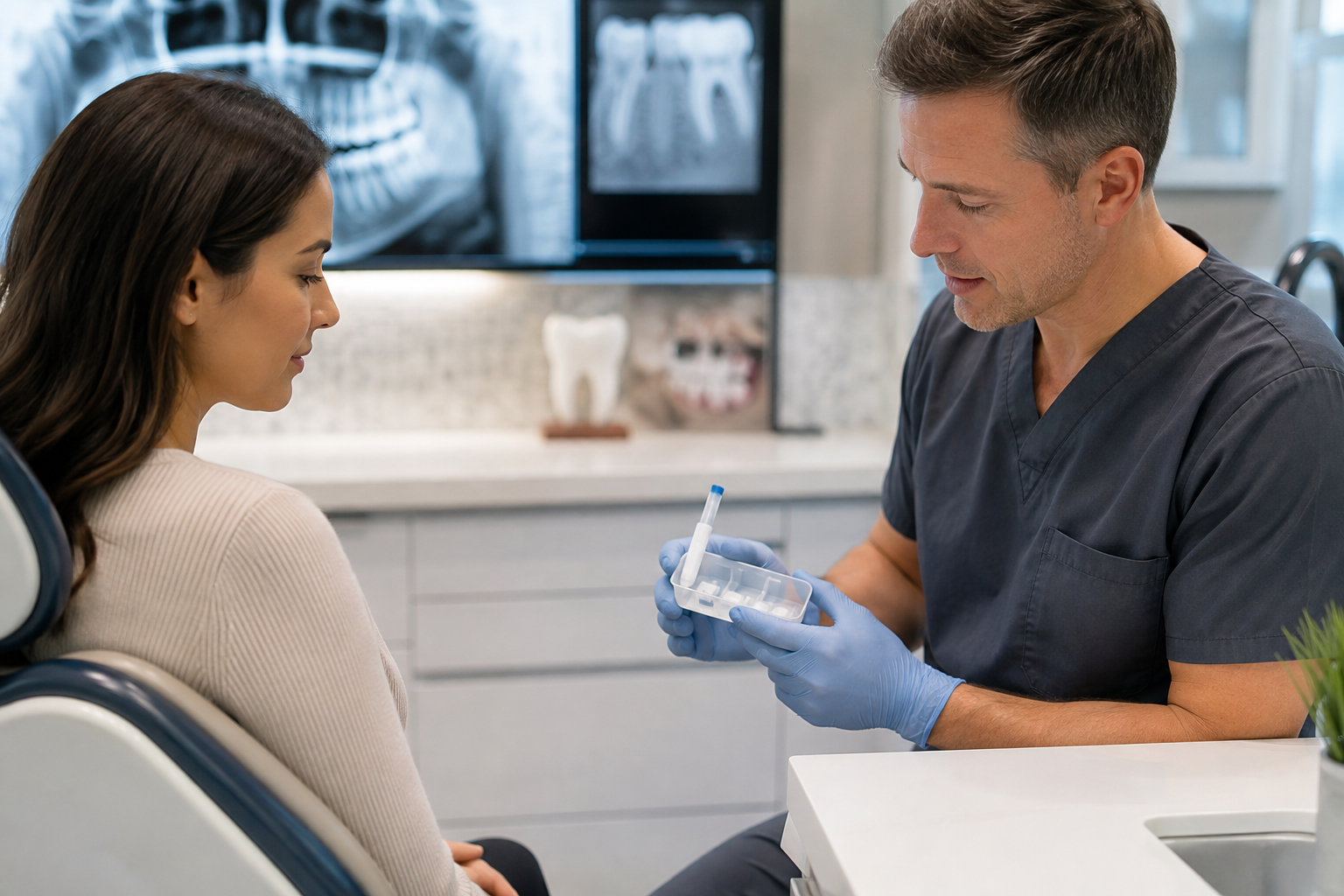
Most of us rarely think about saliva unless our mouth suddenly feels unusually dry or we notice a change in taste. Yet saliva plays an important role in keeping your mouth comfortable, protecting your teeth, helping with digestion, and supporting the natural balance of bacteria in your mouth. Changes in the amount, texture, colour, or even taste of your saliva can sometimes provide useful clues about what is happening with your oral health and, in certain cases, your overall health. At Guelph Royal Dental Centre, noticing these small changes can help you identify dental concerns before they become harder to manage.
Why Is Saliva So Important?
Your salivary glands continuously produce saliva throughout the day. Although it is mostly water, saliva also contains minerals, proteins, enzymes, and other substances that perform several important jobs.
Saliva helps wash away leftover food particles and neutralize acids produced by bacteria. It also contains calcium and phosphate, which help support tooth enamel after exposure to acids from foods and drinks.
Without enough saliva, your mouth may become more vulnerable to cavities, gum irritation, bad breath, and oral infections.
Saliva also makes chewing and swallowing easier. Certain enzymes in saliva begin breaking down food before it reaches your stomach, making it an important part of the digestive process.
What Can Dry Mouth Tell You?
Everyone experiences a dry mouth occasionally. You might notice it after exercise, when you wake up in the morning, or when you haven’t had enough water.
Persistent dry mouth, however, deserves more attention.
Common causes can include:
- Dehydration
- Certain prescription or over-the-counter medications
- Mouth breathing
- Stress or anxiety
- Smoking or vaping
- Changes in salivary gland function
- Some medical conditions
People with ongoing dry mouth may also notice sticky saliva, difficulty swallowing dry foods, cracked lips, bad breath, or a burning feeling in the mouth.
Because saliva helps protect teeth, reduced saliva production can also increase the risk of tooth decay. A dentist can examine your mouth for signs of dryness and recommend ways to protect your teeth.
Thick or Sticky Saliva
Saliva can occasionally feel thicker than usual, particularly when you are dehydrated or have been breathing through your mouth.
Thick saliva may also occur when saliva production decreases. In some cases, medications or illness can temporarily affect its consistency.
Drinking enough water may help if dehydration is the cause. Sugar-free gum containing xylitol can sometimes encourage saliva production.
If thick saliva continues despite staying hydrated, consider discussing it with your dentist or physician.
Changes in Saliva Colour
Healthy saliva is normally clear. Small, temporary changes are not always a concern, especially after eating colourful foods or drinks.
However, saliva that frequently appears red or pink may contain a small amount of blood. Bleeding gums are one common explanation, particularly when brushing or flossing.
Persistent gum bleeding can be associated with gingivitis or more advanced gum disease. Don’t ignore it just because there is little or no pain.
Brownish saliva can occasionally appear after smoking or consuming strongly coloured foods and drinks. If unusual discolouration continues without an obvious explanation, see a dentist.
Saliva and Bad Breath
Saliva naturally helps clean the mouth. When saliva production decreases, bacteria and food debris can remain in the mouth longer, which may contribute to unpleasant breath.
Morning breath is a familiar example. Saliva production naturally decreases while you sleep, allowing more odour-producing bacteria to accumulate.
Persistent bad breath during the day may also be associated with plaque buildup, gum disease, cavities, dry mouth, or other oral conditions.
Regular brushing, cleaning between your teeth, tongue cleaning, and drinking enough water can help. If bad breath continues despite good oral hygiene, your dentist can look for an underlying dental cause.
Can Saliva Reveal Information About General Health?
Saliva contains many substances that researchers can measure, including hormones, antibodies, enzymes, and genetic material. Saliva testing is already used in some areas of medicine and continues to be studied as a convenient, non-invasive way of detecting certain conditions.
However, changes in saliva alone cannot diagnose a medical condition.
For example, dry mouth can occur for many reasons and does not automatically mean that someone has an underlying disease. Similarly, changes in taste or saliva consistency can result from medications, diet, dehydration, illness, or oral-health problems.
That is why you should consider noticeable or persistent changes alongside other symptoms and, when needed, have an appropriate health professional evaluate them.
How to Support Healthy Saliva Production
Simple daily habits can help your mouth maintain healthy saliva production.
Try to:
- Drink water regularly throughout the day.
- Brush twice daily with fluoride toothpaste.
- Clean between your teeth every day.
- Limit frequent sugary or acidic snacks and drinks.
- Chew sugar-free gum if appropriate to encourage saliva flow.
- Avoid tobacco products.
- Tell your dentist about medications that may be contributing to dry mouth.
- Attend routine dental checkups and professional cleanings.
During an examination, Guelph Royal Dental Centre can check for signs associated with reduced saliva, including dry tissues, cavities, enamel changes, gum irritation, and other oral health concerns.
When Should You See a Dentist?
Occasional dry mouth or a temporary change in saliva is usually not an emergency. However, it’s worth arranging a dental appointment if symptoms continue for several days or return repeatedly.
These can include persistent dry mouth, unusually thick saliva, frequent bleeding gums, ongoing bad breath, mouth sores that do not heal, difficulty swallowing, unexplained taste changes, or a noticeable change in saliva colour.
Regular dental checkups are also valuable even when nothing feels wrong. Dentists can often spot early changes in the teeth, gums, and oral tissues before they cause discomfort.
Pay Attention to the Small Changes
Saliva may seem insignificant, but it is one of your mouth’s natural defence systems. Paying attention to changes in saliva, alongside good brushing, flossing, hydration, and regular dental visits, can help you stay aware of changes in your oral health.
If you have been experiencing persistent dry mouth, changes in your saliva, bleeding gums, bad breath, or another dental concern, contact the office at 519-837-1870 to schedule an appointment with Guelph Royal Dental Centre.
DISCLAIMER: The advice offered is intended to be informational only and generic in nature. It is in no way offering a definitive diagnosis or specific treatment recommendations for your particular situation. Any advice offered is no substitute for proper evaluation and care by a qualified dentist.