
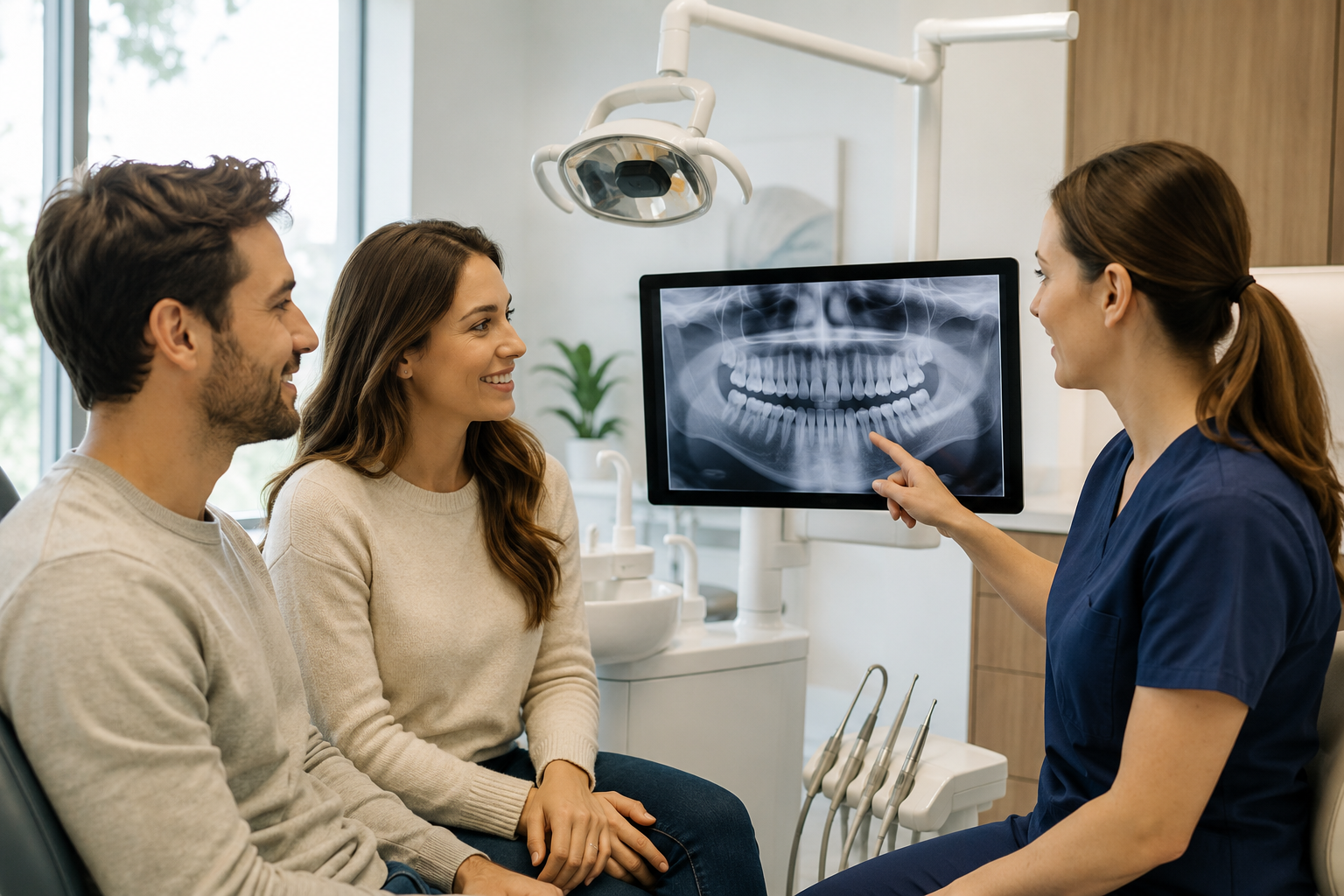
Many patients feel uneasy when their dentist recommends X-rays. You may wonder how much radiation is involved, whether repeated images are safe, or whether your child really needs them. These are reasonable questions, especially when radiation is often discussed as something to avoid.
At Guelph Royal Dental Centre, we encourage patients to ask questions about dental imaging and understand why we recommend a particular X-ray. Digital dental X-rays use low levels of radiation and provide important information that may not be visible during a visual examination.
Why Do Dentists Take Dental X-Rays?
A dentist can learn a great deal by examining your teeth and gums, but some areas of the mouth are hidden from view. X-rays let the dental team see between teeth, beneath fillings, around tooth roots, and inside the jawbone.
Dental X-rays may help identify:
- Cavities between teeth
- Infections near tooth roots
- Bone loss caused by gum disease
- Cracked or damaged teeth
- Impacted wisdom teeth
- Problems beneath crowns or fillings
- Changes in a child’s developing teeth
- Jawbone conditions that require further attention
Finding these concerns early may make treatment simpler and help prevent pain, infection, or additional damage.
How Much Radiation Is Used?
Radiation exposure is measured in units called microsieverts, written as µSv. The exact amount from a dental X-ray varies by image type, equipment, area examined, and settings used.
According to the International Atomic Energy Agency, a typical intraoral dental X-ray procedure may involve approximately 1-8 µSv. A panoramic X-ray, which captures a wider image of the teeth and jaws, may involve approximately 4-30 µSv.
These amounts are generally considered low. Everyone is naturally exposed to background radiation from the environment, including the ground, the atmosphere, and cosmic rays. A small dental X-ray may be comparable to a small fraction of the background radiation a person normally receives in daily life.
A three-dimensional cone beam computed tomography scan, commonly called a CBCT scan, usually delivers more radiation than a standard two-dimensional dental X-ray. For that reason, it is typically reserved for situations where detailed three-dimensional information could affect diagnosis or treatment planning.
Are Digital X-Rays Different From Traditional Film X-Rays?
Digital X-rays use an electronic sensor rather than traditional photographic film. The sensor captures the image and displays it on a computer, often within seconds.
Because modern digital sensors are highly responsive, they can usually produce useful images with less radiation than older film-based systems. Digital images can also be enlarged, adjusted, and examined closely, helping the dentist evaluate small details without automatically needing another image.
However, “digital” does not mean no radiation is used. It means the image is recorded electronically and that modern technology can help make the process more efficient.
How Dentists Limit Radiation Exposure
Dentists should not perform dental imaging simply because a certain amount of time has passed. The decision should be based on the patient’s age, symptoms, dental history, cavity risk, gum health, previous X-rays, and current examination findings.
The dental team at Guelph Royal Dental Centre considers whether an image is likely to provide information that may influence your care. When an X-ray is appropriate, several measures can help keep exposure as low as reasonably achievable:
- Using digital sensors and properly maintained equipment
- Selecting the smallest practical area to be examined
- Adjusting exposure settings for the patient and image type
- Positioning the sensor carefully to reduce the chance of retakes
- Reviewing existing X-rays before ordering new ones
- Taking only the images needed for diagnosis or treatment
You can also let the office know when and where your most recent dental X-rays were taken. In some cases, the office may transfer and review previous images from another dental clinic.
Do Children Need Dental X-Rays?
Children may sometimes require X-rays because their mouths are changing quickly. Their dentist may need to check tooth development, look for cavities between closely spaced teeth, or assess the position of permanent teeth that have not yet appeared.
Not every child needs X-rays at the same age or frequency. A child who has several cavities or a high risk of tooth decay may need imaging sooner than a child with healthy teeth and a low cavity risk.
Parents should feel comfortable asking what type of image is being recommended, what the dentist is looking for, and how the result may affect the child’s care.
What About Dental X-Rays During Pregnancy?
Tell your dentist if you are pregnant, think you may be pregnant, or are trying to become pregnant. This allows the dental team to consider your circumstances when planning care.
Necessary dental X-rays may still be recommended when the information is important for diagnosing pain, swelling, infection, or another urgent concern. Delaying treatment for an active dental infection can create its own health risks. Elective imaging that is not immediately needed may sometimes be postponed after a discussion with the dentist.
When Should You Visit a Dentist?
Do not wait for your next routine appointment when you have symptoms such as:
- Persistent tooth pain or sensitivity
- Swelling in the gums, face, or jaw
- Pain when biting or chewing
- A broken or loose tooth
- Bleeding gums that do not improve
- A bad taste or drainage near a tooth
- A filling or crown that feels damaged
- Difficulty opening your mouth
An examination can help determine whether you need an X-ray and which type would provide the most useful information.
Prevention Reduces the Need for Extensive Treatment
Dental X-rays are diagnostic tools, not replacements for regular preventive care. Brushing twice daily with fluoride toothpaste, cleaning between your teeth, limiting frequent sugary snacks and drinks, and attending routine checkups can lower the risk of decay and gum disease.
Regular visits also allow your dentist to monitor small changes over time. When a concern is identified early, you may be able to address it before it becomes painful or requires more complicated treatment.
Digital dental X-rays involve low radiation exposure and can provide valuable information when used appropriately. Your dentist should be able to explain why an image is recommended and how it may guide your treatment.
To arrange a checkup or discuss questions about dental X-rays, contact the office at 519-837-1870 and book an appointment with Guelph Royal Dental Centre.
DISCLAIMER: The advice offered is intended to be informational only and generic in nature. It is in no way offering a definitive diagnosis or specific treatment recommendations for your particular situation. Any advice offered is no substitute for proper evaluation and care by a qualified dentist.